From Interview Bottleneck to 3× Screening Capacity
Screening more candidates without adding interview hours
- 3×
- Screening capacity
- 10m
- Candidate assessment
- 12
- Candidates screened in 2 hours
The problem
As our team grew, we started receiving hundreds of applications for open roles.
Our initial screening process was simple: schedule four candidates a day for 30-minute interviews. But in most cases, we knew within the first ten minutes whether someone had the technical foundation to move forward.
Roughly 90% of applicants didn't make it past this first qualification step.
That created two problems.
First, a significant amount of our time was being spent scheduling and completing interviews where the outcome became obvious very quickly.
Second, existing assessment platforms didn't fit the economics of the problem. Many commercial tools charged based on candidate volume. When hundreds of people could apply for a role — most of whom would be filtered out immediately — paying for every assessment didn't make much sense for us.
They also included layers of functionality and AI features we simply didn't need.
We didn't need a bigger recruiting stack.
We needed a cheaper, faster way to answer one question:
Is this candidate worth interviewing?
What we built
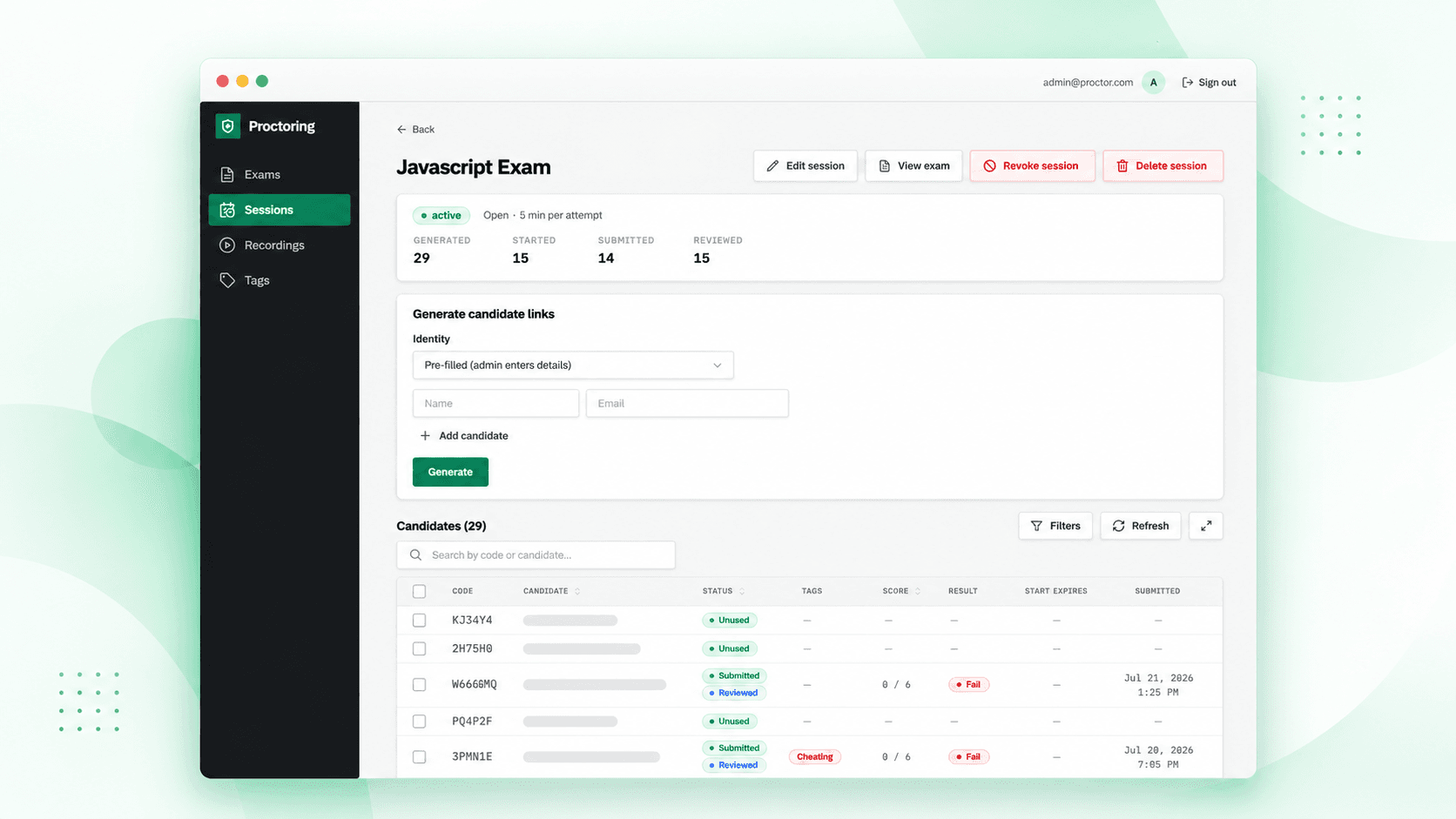
We replaced the initial live interview with a short, asynchronous, proctored assessment built around our exact hiring workflow.
We could create reusable exams with our own questions and time limits, then create a session for each hiring round, generate assessment links, and send them directly to candidates.
During an attempt, the platform could record the candidate's:
- Screen
- Webcam
- Audio
- Answers to each question
The important part wasn't simply recording the assessment.
It was changing how we reviewed it.
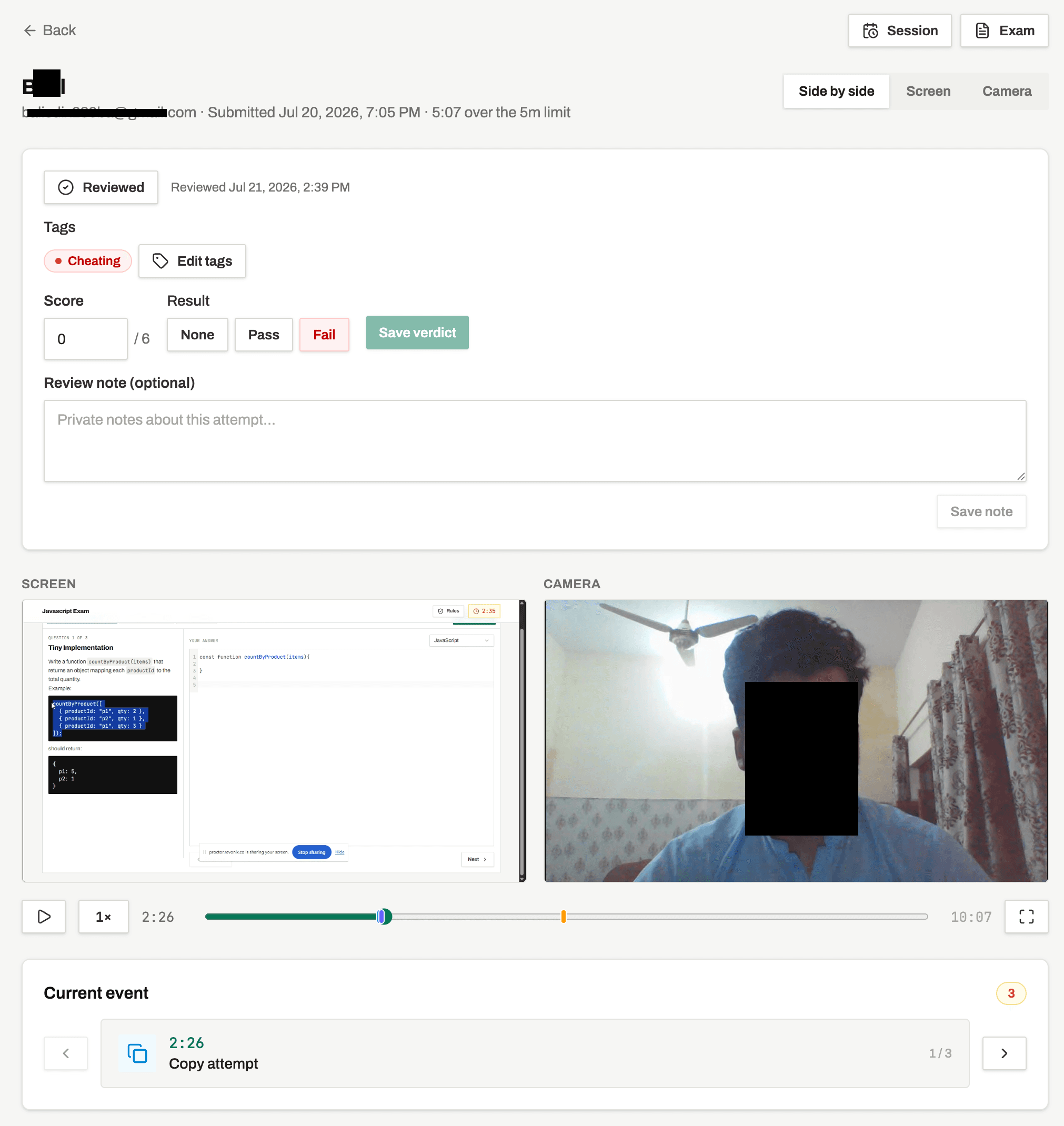
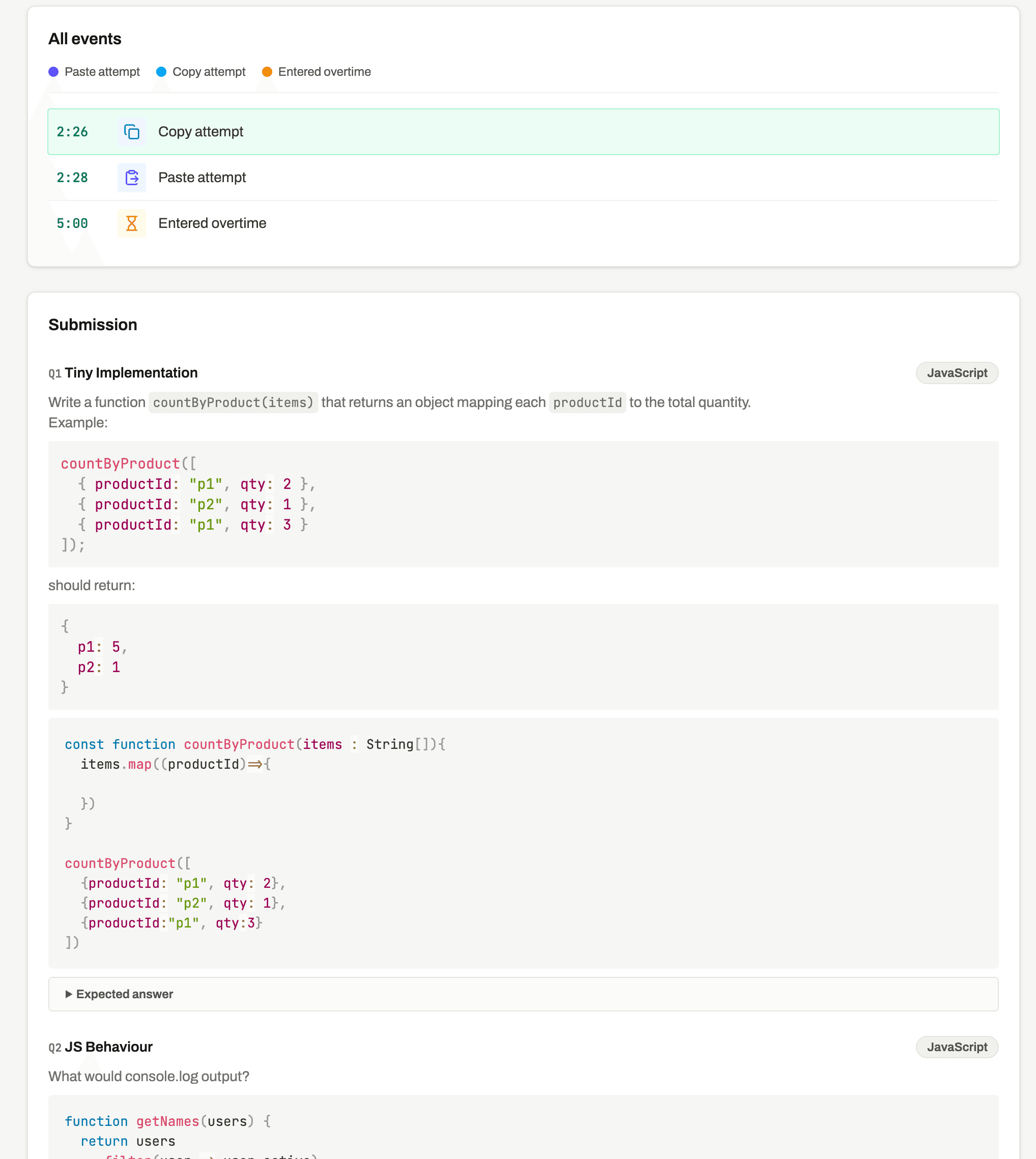
Candidate answers appeared directly alongside the recording, so we didn't need to watch every ten-minute attempt from beginning to end.
If the answers clearly didn't meet the bar, the review ended there.
If the answers looked good, we could scan the recording to verify the attempt and check for anything suspicious before moving the candidate forward.
That meant our time was spent reviewing promising candidates rather than repeatedly sitting through qualification calls.
The outcome
- Screening capacity increased from 4 candidates to 12 candidates in the same two-hour window
- The initial qualification step went from a 30-minute scheduled interview to a 10-minute assessment
- Candidates could complete the first stage without coordinating calendars with our team
- Reviews became asynchronous, allowing us to screen applicants when it fit our schedule
- Low-fit candidates could be filtered quickly without consuming a full interview slot
- We avoided paying per candidate for a larger recruiting platform when applicant volume could reach into the hundreds
- The actual human interview was reserved for candidates who had already demonstrated that they were worth speaking to
The result wasn't a more complicated hiring system.
It was a smaller, purpose-built solution around the exact point where our existing process was wasting time and money.
We didn't automate the hiring decision. We automated the bottleneck before it.
Got a bottleneck that looks like this?
Book a strategy call and we'll tell you honestly whether it's worth automating.
Book a Strategy Call